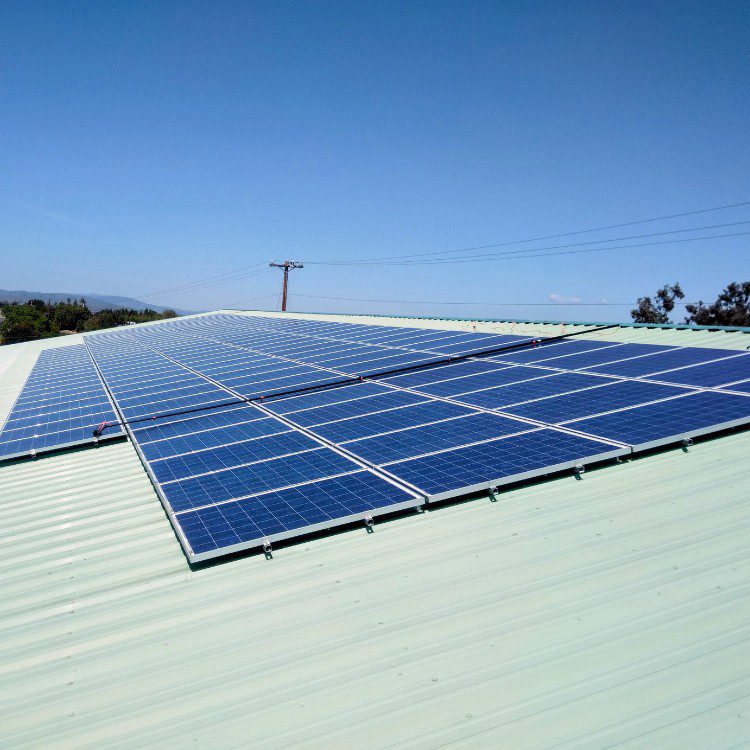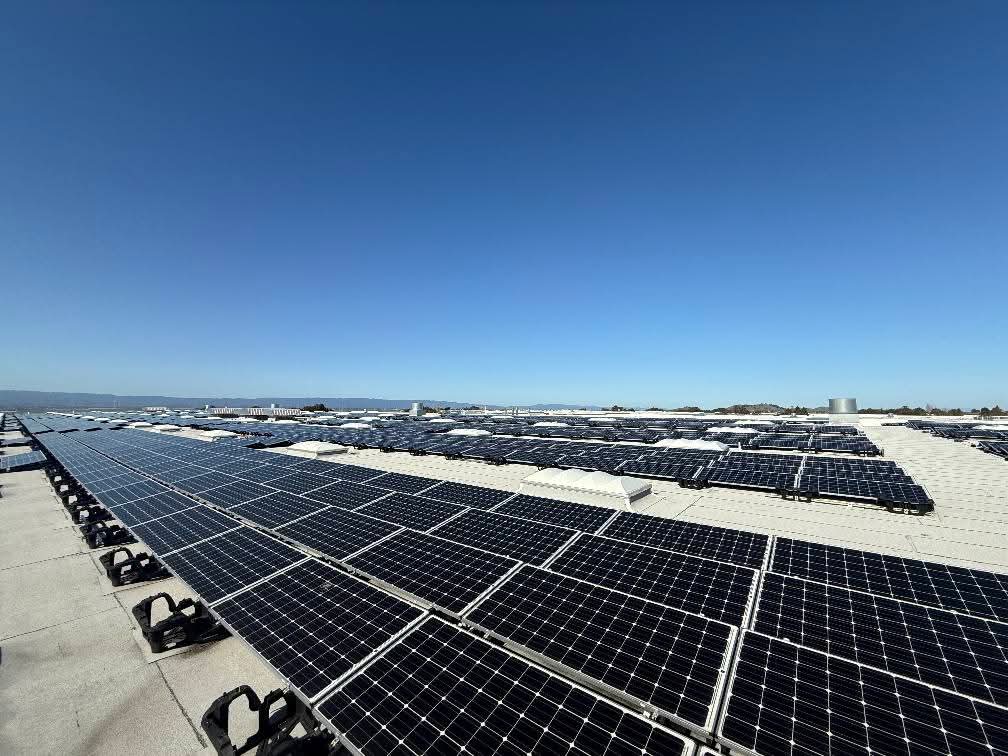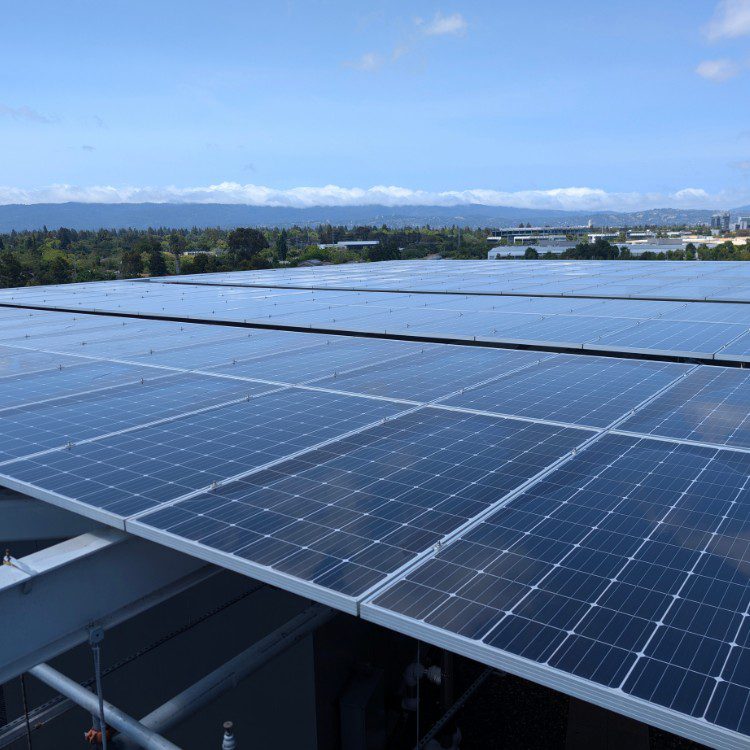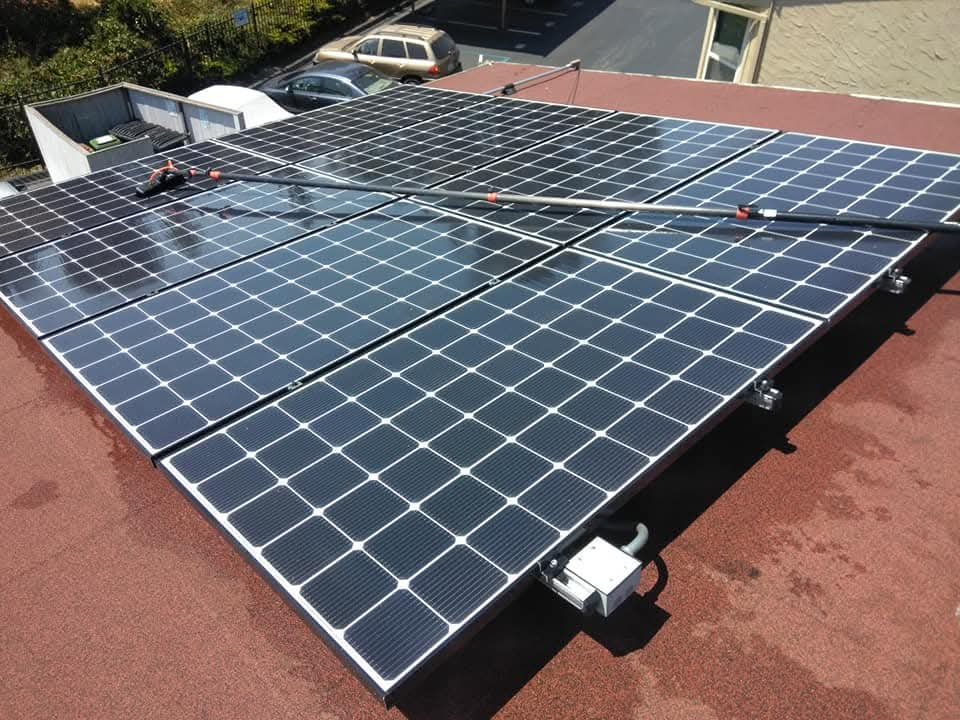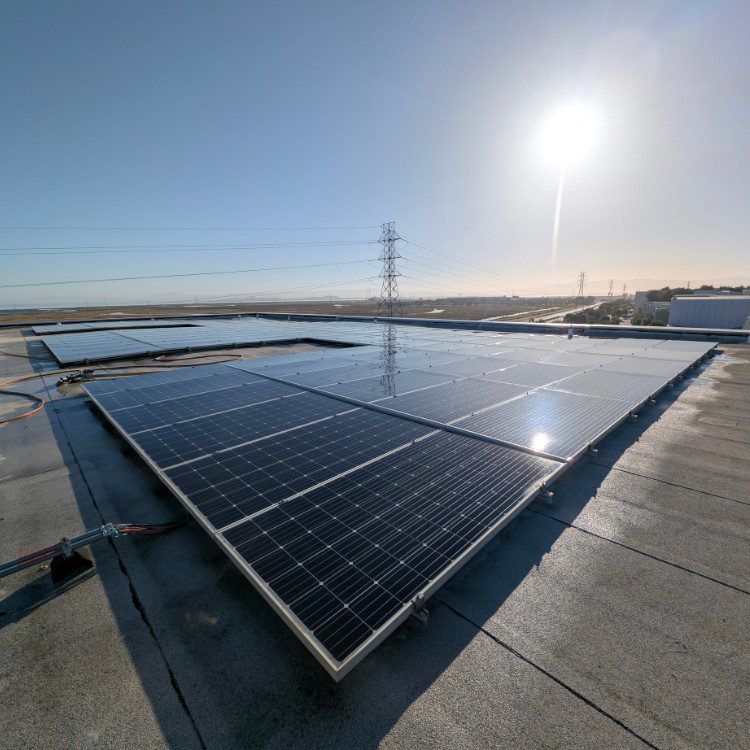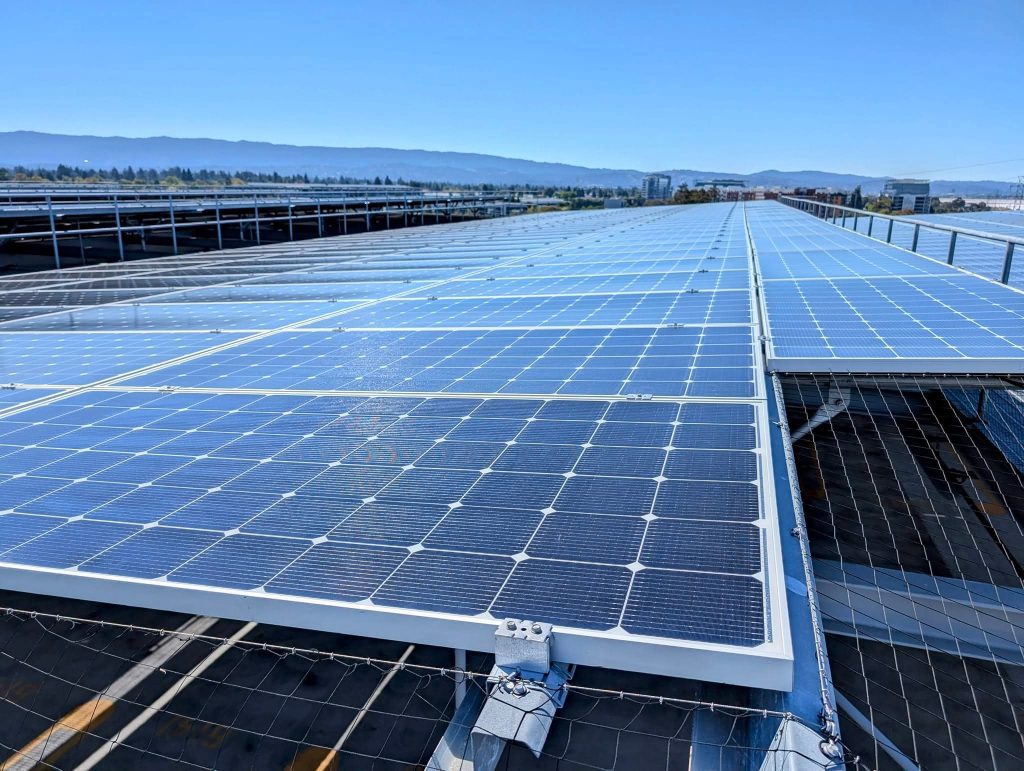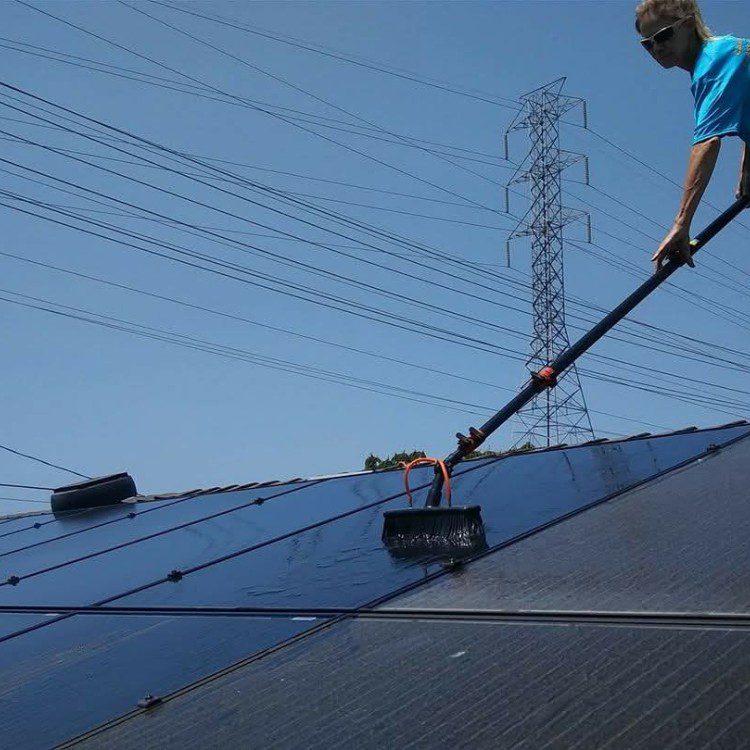
Large solar system cleaning is one of the simplest — and most undervalued — ways to protect production and lift ROI across utility-scale and commercial PV. If you’re responsible for procurement or O&M, read this guide end-to-end and you’ll be able to choose an optimal cleaning method, estimate costs and water use per MW, run a simple ROI, and draft the procurement & safety language you need for an RFP or pilot.
TL;DR — Quick verdict for procurement leads
Short answer: For utility-scale arrays pilot autonomous PV cleaning robots (waterless) combined with periodic deionized (DI) wet/soft-wash for stubborn soiling; for mid-size commercial rooftops stick with DI water + soft brushes and local crews; tractor-mounted brush systems are a good fit where long, flat ground arrays have easy vehicle access. In the Bay Area, California Glass & Solar manages commercial fleets with purified-water soft-wash and can coordinate hybrid vendor solutions for larger sites and pilots.
Quick decision grid (one-line recommendations by site type)
- Desert / very dusty, water-limited: PV cleaning robots or electrostatic systems (waterless).
- Flat ground-mount with road access: tractor-mounted brushes using DI water.
- Rooftop / commercial in rain-influenced climates: quarterly DI soft-wash with local crews.
- Sites with heavy bird fouling / guano: manual spot cleaning & bird-deterrent installations.
How to use this guide
After reading you’ll be able to:
- Pick the optimal cleaning method for your site type and constraints.
- Estimate costs and water use per MW and per cleaning.
- Run a quick ROI using site-specific inputs.
- Create a cleaning schedule and monitoring triggers.
- Produce procurement language and a safety checklist to drop into an RFP.
If you’re short on time: read the TL;DR and the Quick Comparison table, then skip to Procurement & Safety to assemble an RFP. If you need to build a pilot, follow the step-by-step sections below.
Why cleaning large PV systems matters (quick numbers)
- Typical soiling losses: roughly 1–6% annual in many regions; >6% in dusty, low-rainfall sites; extreme cases (very near deserts or industrial dust) have reported 50%+ temporary loss.
- Energy uplift = avoided soiling loss. Example: a 1 MW site with specific yield 1,700 kWh/kW-year and a 3% uplift => 1,000 kW × 1,700 × 0.03 ≈ 51,000 kWh/year regained.
- Rule-of-thumb conversions used in this guide:
- Panels per MW ≈ 4,000 (use your actual panel count in calculations).
- Cleaning cost band (industry): $0.37–$1.75 per panel per clean → roughly $1,500–$7,000 per MW per clean (variable by method, mobilization, and scale).
Quick comparison: large solar system cleaning methods
| Method | Speed (panels/hr) | Effectiveness (typical soils) | Panel safety (scratch risk) | Water use (L/m² / gallons/panel) | Typical cost signal (per panel) | Best use cases | Key drawbacks |
|---|---|---|---|---|---|---|---|
| PV cleaning robots (autonomous, waterless) | Varies by model: ~150–300 panels/hr per unit (fleet operation scales throughput) | High for loose dust & common residues; good for frequent schedules | High (microfiber/soft brush; low mechanical stress) | 0 L/m² (waterless) | Vendor CapEx / subscription model; OpEx often lower long-term | Water-limited deserts, frequent soiling, large contiguous ground-mounts | CapEx or subscription fees; challenge on very uneven or steep terrain; vendor claims vary |
| Tractor-mounted brushes (vehicle + DI water) | Medium–high (hundreds to low thousands panels/hr depending on width & access) | High for dust and tacky soils when used with DI water | Medium–high (soft-brush designs recommended) | ~0.25–1.5 L/m² (~0.5–3 L/panel ≈ 0.13–0.8 gallons/panel assuming 2 m²/module) | Often quoted as per-panel similar to manual for large sites, but equipment reduces labor | Long, flat ground arrays with good vehicle access | Requires access/road; mechanical contact risk if soft brushes not used; water still required |
| Manual wet crews (DI water + soft brushes) | Low–medium (10–60 panels/hr per crew depending on layout) | Very effective for bird droppings and sticky residues | Medium (care required to avoid abrasion; mandate soft tools) | ~0.5–4 L/m² (1–8 L/panel ≈ 0.26–2.1 gallons/panel) | $0.37–$1.75 per panel common in industry bids | Rooftops, spot cleaning, inaccessible ground-mounts | High OpEx, safety risk on roofs, inconsistent quality |
| Waterless & low-water alternatives (electrostatic, coatings, dry brushes) | Varies, electrostatic/dry-brush methods can be fast (hundreds/hr); coatings passive | Medium-high for dry dust; poor for sticky bird droppings | High (non-abrasive if correctly applied) | 0 L/m² for truly waterless; coatings reduce frequency | Coatings = CapEx; electrostatic = CapEx or equipment fees | Arid, dusty areas where water is constrained | May not handle biological fouling; coatings can affect module warranty—check with OEM |
Headline takeaways from the comparison
- Robots are ideal when you need high-frequency cleaning in water-scarce sites and can validate throughput and uptime with vendors.
- Tractor-mounted systems offer excellent throughput on vehicle-friendly ground-mounts and pair well with DI water to avoid spotting.
- Manual wet crews remain necessary for spot problems (bird droppings, pollen mats) and rooftops, but their OpEx scales poorly on utility farms.
- Waterless/electrostatic and coatings are promising in arid, low-humidity dust conditions—but evaluate sticky-soil performance and module OEM warranty effects.
Deep dive: how each method works + practical evaluation checklist
PV cleaning robots (autonomous / waterless)
How they clean: most commercial robots use microfiber or soft brushes plus airflow or vacuum-assisted dual-pass cleaning. Nightly autonomous runs are common to avoid production loss; fleets are managed with scheduling software and remote diagnostics.
Pros: very low water use, repeatable schedules, reduced onsite labor, and good for frequent small-touch cleans that prevent heavy accumulation.
Cons: CapEx or subscription fees; terrain limits (very uneven fields, steep slopes), vendor data gaps around panels/hour and uptime—always ask for documented metrics.
Practical checklist when evaluating robots
- Panels/hour target per unit and expected fleet throughput for your farm (ask for site-simulated numbers).
- Battery life and recharge time; how many units needed for continuous operation.
- Navigation on uneven terrain and obstacles (trackers, fences, guy-wires).
- Fleet/swarm management software and SCADA integration for PR reporting.
- Maintenance cadence, spare parts lead times, brush/cloth replacement warranty.
- Remote diagnostics, remote firmware updates, and in-field troubleshooting support SLA.
What to ask vendors (robotic)
- Documented panels/hour per unit (include real-world constraints like obstacles).
- Battery runtime & charge cycles; how units handle nights with low temperatures or rain.
- Downtime percentage and mean time to repair.
- Warranty on consumables (brushes/microfiber) and evidence of no-scratch operation.
- References and before/after PR snapshots for comparable climate and array tilt.
- Data access model: are logs delivered into SCADA or via vendor dashboard?
Tractor-mounted brushing systems (vehicle-mounted + DI water)
How they work: rolling soft-brush heads mounted on tractors or small utility vehicles traverse rows; DI water is fed to brushes to lift and rinse soils and prevent mineral spotting.
Pros: very high throughput on flat arrays with roads, familiar vehicle logistics, effective on tacky soils when coupled with DI water.
Cons: needs road/turning space; mechanical contact risk if low-quality brushes used; still uses water (though less than manual heavy washing).
Evaluation checklist (tractor-mounted)
- Vehicle footprint and turning radius — verify every row, gate, and pad in a site visit.
- Cleaning width (panels/pass) and speed — determine panels/hour per vehicle.
- DI water supply strategy: onsite DI trailer, bulk delivery, or onsite DI generation; recycling options.
- Operator skill requirements and licensing; ground-prep needs.
- Inspect brush flex & pressure to confirm low-scratch operation; request test footage.
Manual wet cleaning (local crews, DI water, soft brushes)
Use cases: rooftops, spot cleaning for bird droppings/pollen, and detailed cleans after long dry spells. Manual teams use purified/deionized water with soft brushes and low-pressure rinses to avoid micro-cracks and spotting.
Pros: flexible, very effective against biological fouling and sticky residues.
Cons: highest OpEx, safety risks on roofs, and quality varies by crew.
Operational tips (manual)
- Mandate DI or purified water — never tap water without spot-prevention chemistry.
- Specify soft-brush heads and low-pressure rinse only; prohibit high-pressure washers unless specified by OEM.
- Require photo-documented pre/post sections and PR tracking for spot-clean events.
Waterless & low-water alternatives (electrostatic, coatings, dry brushes)
How they work: electrostatic devices repel charged dust particles; hydrophobic coatings reduce adhesion and slow soiling accumulation; dry microfiber systems physically remove dust without water.
Pros: radical water savings, suitable for very arid sites.
Cons: may not handle bird droppings or sticky industrial deposits; coatings can affect module FTCs and warranty—always check with module OEM.
Caveat
Coatings and surface treatments can alter optical and thermal characteristics; confirm any coating with the module manufacturer and include warranty language in procurement documents.
Cost & ROI: step-by-step model you can copy
Simple ROI formulas (copy these into a spreadsheet):
Annual energy gain (kWh) = System capacity (MW) × 1,000 (kW/MW) × specific yield (kWh/kW-year) × expected PR uplift (%) Annual benefit ($) = Annual energy gain × $/kWh Payback (years) = One-time CapEx / Annual net benefit For OpEx comparisons: Annual OpEx = cost_per_clean × panels × frequency_per_year Net annual benefit = Annual benefit, Annual OpEx
Inputs to gather from your site
- Installed capacity (MW) and exact panel count.
- Specific yield (kWh/kW-year) or baseline annual generation and PR.
- Current soiling rate (if available) or historic PR trend.
- Local energy value ($/kWh) — use contract price or avoided cost.
- Vendor pricing model: per-panel per-clean, per-MW subscription, or CapEx purchase.
Worked examples
Example A — 1 MW, moderate soiling
- Assumptions:
- Capacity = 1 MW (1,000 kW)
- Specific yield = 1,700 kWh/kW-year
- Expected uplift = 3%
- Energy value = $0.06/kWh
- PANELS = 4,000 (rule of thumb)
- Per-clean cost range = $0.37–$1.75/panel
- Cleaning frequency = quarterly (4×/year)
- Annual energy gain = 1,000 × 1,700 × 0.03 = 51,000 kWh
- Annual benefit = 51,000 × $0.06 = $3,060/year
- Per-clean cost = 4,000 × $0.37–$1.75 = $1,480–$7,000 per clean
- Annual cleaning OpEx = ×4 = $5,920–$28,000/year
- Net = Annual benefit ($3,060) − OpEx ($5,920–$28,000) → negative in this scenario unless per-clean cost or frequency drops, or uplift is higher.
Takeaway: at low energy prices and modest uplift, frequent commercial wet cleaning is hard to justify for a 1 MW plant unless you can negotiate lower per-clean costs, reduce frequency, or demonstrate higher uplift (e.g., >6%). Consider targeted spot cleaning, monitoring triggers, or a blended approach.
Example B — 100 MW utility, high soiling (robotic pilot vs manual)
- Assumptions:
- Capacity = 100 MW (100,000 kW)
- Specific yield = 1,700 kWh/kW-year
- Expected uplift with active cleaning = 6% (high-soiling desert)
- Energy value = $0.04/kWh (wholesale)
- Panel count = 100 × 4,000 = 400,000 panels
- Manual per-clean cost = $0.50/panel (baseline)
- Cleaning frequency manual = monthly (12×/year)
- Annual energy gain = 100,000 × 1,700 × 0.06 = 10,200,000 kWh
- Annual benefit = 10,200,000 × $0.04 = $408,000/year
- Manual annual OpEx = 400,000 panels × $0.50 × 12 = $2,400,000/year
- Vendor-claimed labor reduction using robots = 85–90% (vendor-reported)
- If robots reduce the labor-driven portion of OpEx by 85% → theoretical OpEx ≈ $360,000/year (vendor-claimed)
- Net with robots (vendor-claimed) = $408,000 benefit − $360,000 OpEx = $48,000/year (ignores CapEx or subscription fees)
- Vendor materials claim payback ~2–3 years in some deployments — treat that as vendor-reported and validate via a pilot.
Takeaway: at 100 MW and high soiling, robots can swing the model if their true costs (CapEx or subscription + maintenance) remain below the manual OpEx delta. That vendor-claimed 2–3 year payback should be validated with a pilot and full TCO analysis (equipment, spare parts, data management, and mobilization).
Sensitivity snapshot (how payback shifts)
| Variable | Low | Mid | High | Impact on payback |
|---|---|---|---|---|
| Soiling uplift | 1% | 3% | 6% | Higher uplift shortens payback proportionally (double uplift → double benefit). |
| Energy price ($/kWh) | $0.03 | $0.06 | $0.12 | Higher rates materially improve economics of cleaning. |
| Cleaning frequency | Annual | Quarterly | Monthly | More frequent cleaning raises OpEx unless automation reduces costs. |
ROI spreadsheet template (fields to copy)
| Field | Example value | Notes |
|---|---|---|
| Capacity (MW) | 1 | Installed DC capacity |
| Panels | 4,000 | Actual panel count |
| Specific yield (kWh/kW-year) | 1,700 | Use historical or weather-model value |
| Expected uplift (%) | 3 | Estimate from soiling history or pilot |
| Energy price ($/kWh) | 0.06 | Contract rate or avoided cost |
| Per-clean cost ($/panel) | 0.75 | Vendor quote |
| Frequency (per year) | 4 | Quarterly, monthly, etc. |
| CapEx (robots or equipment) | 0 | Enter purchase cost if applicable |
| Subscription or annual service | 0 | Enter recurring cost |
Water use, wastewater & regulatory checks
- Typical water use: roughly 0.5–4 L/m² per cleaning (site & method dependent). Using a 2 m² panel standard that translates to ~1–8 L/panel (≈0.26–2.1 gallons/panel).
- Per MW conversion (rule-of-thumb, 4,000 panels/MW): per-clean water per MW ≈ 4,000 × 1–8 L = 4,000–32,000 L/MW per clean (≈1,050–8,450 gallons/MW per clean).
- Waterless alternatives: robots & electrostatic options can be 100% waterless or reduce water use by 50–100% depending on hybrid approach.
Permitting & wastewater considerations
- Check local stormwater / discharge permits. In California contact the Regional Water Quality Control Board (RWQCB) for guidance on runoff and discharge limits.
- Avoid soaps that create chemically-contaminated runoff unless your site has permitted treatment or closed-loop recycling.
- Best practices: use DI water to avoid spots, consider closed-loop recovery or portable DI trailers, and capture rinse runoff in sensitive locations.
Operations: building a cleaning schedule & monitoring program
Soiling severity matrix & recommended frequency
- Low (rainy, coastal): 1–2×/year — visual inspections and storm-triggered spot-cleaning.
- Moderate: quarterly — DI soft-wash or tractor-mounted sessions as needed.
- High (dusty/desert): weekly to monthly — robots or high-frequency mechanical cleaning; wet cleans only for sticky residues.
Monitoring triggers
- Production ratio (PR) trend drops — trigger when PR drops by X% vs baseline (typical trigger: 1–3% PR decline sustained).
- Soiling sensors (insolation-normalized short-circuit current sensors) to measure dust accumulation in real time.
- Thermal/IR imaging for hotspots that indicate cell soiling or malfunction.
- Periodic visual inspections and photo logs (monthly or after dust storms).
Data-driven trigger example: if daily soiling accrues at 0.15%/day and your threshold is 2% accumulated soiling, you will hit the trigger in ~13 days — good evidence for frequent automation in dusty sites.
Night vs day cleaning
- Robotic runs are often scheduled at night to avoid production loss and reduce heat/UV stress on crews and equipment.
- Tractor and manual wet crews usually work off-production windows or inverter/isolation-per O&M plan to ensure electrical safety.
- Coordinate LOTO and inverter status with O&M before any live-panel work; document SOPs.
Recommended hybrid approach: regular dry/waterless mechanical cleaning (robotic or tractor) to manage dust + periodic DI wet clean (quarterly or after heavy biological fouling) to address sticky residues and bird fouling.
Procurement & Safety checklist (copy into your RFP)
Procurement essentials
- Scope: explicit panel count, area to be cleaned, available access roads, tilt/row details, tracker or fixed-tilt, and expected frequency.
- Performance metrics to request: panels/hour (per unit & fleet), expected PR uplift per clean (vendor case-study numbers), dust removal % for specified soil types, and allowable micro-scratch rate (evidence).
- Payment structure: per-clean per-panel, per-MW subscription, CapEx purchase with service agreement, or performance-based (pay for proven PR uplift).
- Mobilization fees: specify limits for demobilization & re-mobilization and expected staging locations.
- Water specs: DI water quality requirement, wastewater handling, recycling capabilities, and any chemical approvals.
- Insurance & certification: general liability, workers’ comp, equipment liability; local contractor licensing.
Safety checklist
- Electrical isolation policies and coordination with O&M for LOTO if live-panel access is required.
- Rooftop fall protection SOPs, heat stress mitigation, and heat/UV rotation plans.
- Emergency stop systems on autonomous units and clear egress for tractors/vehicles.
- PPE requirements: eye protection, gloves, high-visibility vests; check for site-specific arc flash requirements with your electrical team.
- Training and verification: vendor & crew safety training certificates, first-aid and site emergency plan.
Example SLA metrics to include
- Target PR improvement window: measurable X% uplift within Y days of cleaning (define method & baseline).
- Completeness: ≥99% panels cleaned per pass or defined exclusions.
- Uptime & response time: specify maximum downtime for autonomous fleets and response SLA for urgent spot-cleaning.
Vendor map & what to ask
Common manufacturers & providers to include in your vendor shortlist: Ecoppia, Taypro, Sunpure, SolarCleano, DARBCO Robotics, Serbot / GEKKO Solar, and SunBotics / SunBrush (distributed by Solar Clean USA). For tractor-mounted and local wet crews, request quotes from regional service providers who can supply DI trailers.
For each vendor ask:
- Real-world panels/hour and fleet uptime statistics for deployments similar to your site.
- Case studies with before/after PR numbers and references in comparable climates.
- Total cost breakdown (CapEx, subscription/O&M, consumables, mobilization).
- Spare parts lead times and typical maintenance cadence.
- Environmental & safety compliance records and data access model.
Evaluation tips
- Require SCADA-integrated before/after PR snapshots or independent metered evidence.
- Insist on a small pilot (1–2 MW or 1–5% of site) with clear success criteria before full roll-out.
- Validate water savings and labor reduction claims with vendor references and pilot metrics.
Case studies, evidence & common vendor claims (how to verify)
- Typical vendor claims: 85–90% labor reduction with robots; payback in 2–3 years in some deployments; measured generation uplift (vendor-reported examples up to +7.7% in desert trials). Treat these as vendor-reported and verify through a pilot and references.
- How to validate in a pilot:
- Record baseline yield & PR for 2–4 weeks with SCADA.
- Deploy the cleaning method on a defined area; capture before/after PR and thermal imaging.
- Extrapolate uplift and compute sample payback including all costs (mobilization, consumption, maintenance).
Implementation roadmap: pilot → scale (practical timeline)
- Site audit & baseline data capture (2–4 weeks): panel count, access roads, water source, baseline PR.
- Select pilot area (1–5% of site or 1–2 MW): run the candidate cleaning method for 4–12 weeks.
- Measure & compare: monthly PR & thermal imaging; compute uplift and cost-per-clean.
- Negotiate contract & finalize SLA/insurance based on pilot data.
- Scale deployment with staggered roll-out and ongoing monitoring; retain a mixed approach (robotic + periodic DI wet clean) where appropriate.
Sample “What I’d do” recommendations
- Desert utility-scale, water-limited: Pilot robotics plus soiling sensors; if robots show ≥3% uplift and acceptable panels/hr, scale across contiguous blocks. Use occasional DI wet cleans for sticky residues and bird events.
- Large flat ground-mount, easy vehicle access: Deploy tractor-mounted brushes with DI water and negotiate per-MW rates; require test strips and PR evidence before full roll-out.
- Rooftop commercial (Bay Area): Use a trusted local provider for DI soft-wash quarterly, combine with bird-deterrent installations and PR monitoring — California Glass & Solar offers Soft Washing Services in The Bay Area | California Glass & Solar, Expert Window Cleaning in The Bay Area | California Glass, free estimates, and can coordinate robotic vendors for hybrid deployments and pilots.
Appendices & templates (copy/paste)
RFP checklist text block (paste into procurement docs)
Scope: [panels, rows, tilt, trackers, access notes] Frequency: [quarterly/monthly/weekly] Performance: Provide panels/hr, expected PR uplift per trial, and ≥99% cleaned completeness Pricing: Provide per-panel per-clean, per-MW subscription, and CapEx purchase options Water: DI water spec, wastewater handling, recycle capabilities Safety & Insurance: General liability, workers' comp, equipment liability; proof on request Pilot: 1–2 MW test with baseline PR capture (2–4 weeks) and 30-day evaluation window Data: SCADA integration or CSV export of cleaning logs and before/after PR snapshots
Sample on-site SOP excerpt for cleaning day coordination
1. Pre-job: Confirm isolation status with O&M; verify weather & no precipitation. 2. Safety brief: Crew/vendor walks site hazards, emergency routes, and PPE. 3. Equipment check: DI water quality, brush condition, battery level (robots). 4. Cleaning window: Start after sunrise ramp-up window or at night for robotics. 5. Post-job: Photo log of sample rows, thermal scan on selected strings, upload PR snapshot to project folder. 6. Issue escalation: Reporting template for micro-scratches, mechanical damage, or chemical spills.
Conclusion & next steps
Pick a cleaning strategy based on four variables: water availability, physical access, soiling type, and your cost model. If you’re managing a large site, validate vendor claims with a small pilot and use PR uplift as your primary KPI. Robots look very attractive for water-limited, high-frequency needs but require careful vetting on throughput and terrain. Tractor-mounted units win where vehicle access is good. Manual DI wet-cleaning still has its place for rooftops and stubborn biological fouling.
If you’re in the Bay Area and want a local partner to run a pilot: California Glass & Solar provides free estimates, Professional Solar Panel Cleaning in The Bay Area including purified-water (DI) soft-wash crews, Services, California Glass and Solar, and can coordinate robotic vendors for hybrid deployments — reach out for a site walk and pilot plan. If you’d like the ROI spreadsheet template in Excel format or a paste-ready RFP, message us and we’ll send the file and SOP snippets you can drop straight into procurement.